Is My AC the Right Size? A Symptom Diagnostic
Short-cycling, running all day, cold-but-clammy rooms — most AC symptoms have a cheap maintenance cause before they have a sizing cause. Tick what you're seeing; we'll show each symptom's honest differential, then how to verify the sizing theory with real numbers instead of a salesperson's guess.
What's your AC doing?
What each symptom actually means
Tick symptoms above to see their differentials.
Verify the sizing theory — three steps, ten minutes
1. Find your current unit's real tonnage. It's coded in the outdoor unit's model number — paste it into the model number decoder (22 brands, instant).
2. Calculate what the space actually needs. Run your real room data — area, climate, sun, ceiling, occupants — through the tonnage calculator.
3. Compare. On the calculator's result panel, set "Compare with your current AC" to the decoded size. Half a ton or more above the calculated load → oversized (short-cycling, humidity); half a ton under → undersized (marathon runtimes). Within the band → your symptoms are maintenance, not sizing.
If the verdict is oversized and the unit otherwise works, the economical move is usually to ride it to natural end-of-life with lower fan speeds, then downsize at replacement — the oversizing guide covers living with one in the meantime.
FAQ
How do I know if my AC is oversized?
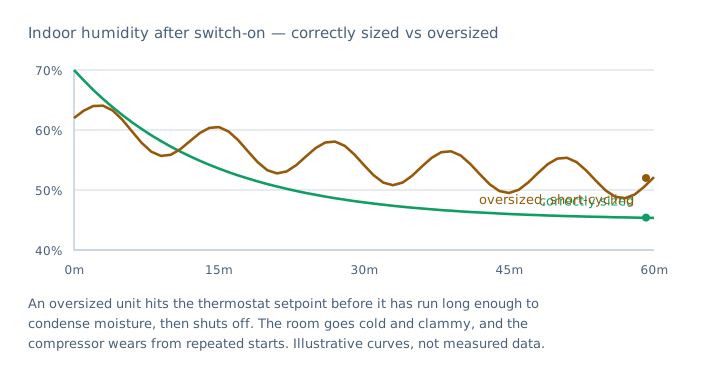
The telltale combination is short cycles (5–10 minutes) plus a cold-but-clammy feel — the unit satisfies the thermostat before removing moisture. Confirm by decoding your unit's tonnage from its model number and comparing it against a proper load calculation for the space; more than about half a ton above the calculated load is meaningfully oversized.
Should I replace my AC with a smaller unit if it's oversized?
Not on symptoms alone, and rarely as an immediate purchase: first rule out the cheap causes (filter, coil, fan settings), then verify the mismatch with real numbers. If a working unit is oversized, the practical moment to downsize is at natural replacement time — meanwhile, lower fan speeds and longer gentle cycles recover much of the comfort.
Why does my AC run all day but the house never gets cool?
In order of likelihood: dirty filter or coils, a refrigerant leak, duct leakage into unconditioned space, an extreme-heat day, and only then genuine undersizing. Verify the sizing theory by calculating the space's actual load and decoding the unit's tonnage before buying anything.
Is short-cycling always caused by an oversized AC?
No — a clogged filter, an icing coil, a weak capacitor or a badly placed thermostat each cause it too, and they're all cheaper to fix. Oversizing is the structural cause that remains when the maintenance causes are ruled out.