Oversized AC: Short-Cycling & Humidity Problems
Updated July 2026 · by Murugan Vellaichamy · reviewed against current standards
What short-cycling does
Air conditioners do two jobs: drop the temperature and condense moisture out of the air. Temperature falls quickly; dehumidification needs sustained runtime over a cold coil. An oversized unit hits the thermostat setpoint in a few minutes and stops before meaningful moisture removal happens. The thermostat is satisfied; your skin is not.
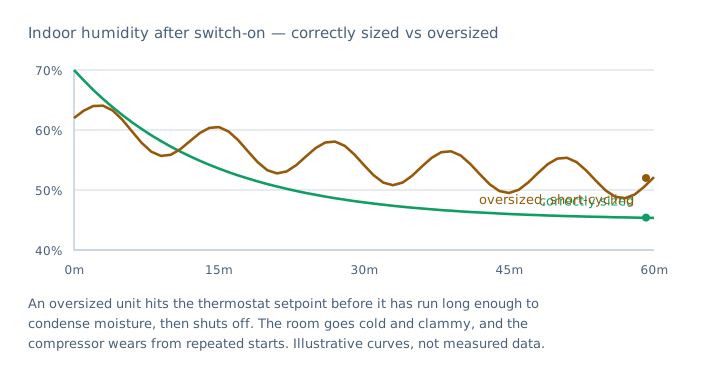
Each restart also stresses the compressor — start-up is the hardest moment in its duty cycle — so frequent cycling shortens equipment life while consuming more energy per unit of cooling delivered.
How much oversizing is too much
Going one half-ton above the calculated load is usually tolerable, especially with two-stage or inverter equipment that can modulate down. A full ton or more above the load is where comfort visibly degrades in humid climates. In dry climates (Arizona, Rajasthan) the humidity penalty is smaller, but the cycling and efficiency penalties remain.
Inverter split ACs are more forgiving than single-stage central systems because they throttle output — but even inverters have a minimum modulation floor, and a grossly oversized inverter spends its life below that floor, cycling like a single-stage unit.
The right approach
Calculate the actual load with all factors — climate, ceiling, sun, occupancy, insulation — then buy the standard size at or just above it. If the result lands within ~5% of the smaller size, the smaller size with good insulation usually delivers better comfort. Run your room through the tonnage calculator and resist the contractor's "go one size up to be safe" reflex. Suspect your current unit already has this problem? The symptom diagnostic walks the differential.
More guides
Manual J Explained SEER vs SEER2 vs EER ISEER & BEE Star Ratings Explained Top Floor Under the Roof Window vs Split vs Portable AC 3 Ways to Find Your Existing AC's Tonnage AC Wiring Basics US Climate Zones for AC Sizing Hot-Dry vs Hot-Humid How Many BTU per Square Foot? Ceiling Height and AC Sizing 1.5 Ton vs 2 Ton AC Heat Pump Sizing Basics R-22 vs R-410A vs R-454B Server Room Cooling Inverter vs Non-Inverter AC Is Your Electrical Panel Big Enough for a New AC or Heat Pump? Humidity, Latent Load and Why 24°C Can Still Feel Sticky
FAQ
Is it better to oversize or undersize an AC?
Neither, but mild undersizing is often more comfortable in humid climates than significant oversizing: a slightly small unit runs long, steady, dehumidifying cycles, while an oversized one short-cycles and leaves moisture behind.
Does an oversized AC use more electricity?
Yes. Start-up surges, low-efficiency partial cycles and the loss of steady-state operation typically cost 10–25% more energy than a right-sized unit delivering the same comfort.
Put the numbers to work: AC tonnage calculator · bill calculator · model number decoder.
Sources & standards
This guide is grounded in recognised industry standards. Primary references:
- ANSI/ACCA 2 Manual J — Residential Load Calculation, the ANSI-recognised method for sizing residential cooling loads (ACCA).
- ANSI/ACCA 3 Manual S — Residential Equipment Selection, matching equipment to the Manual J load (ACCA).
- ENERGY STAR — efficiency criteria and right-sizing guidance (EPA / DOE).
Standards are cited for reference and evolve over time — always follow the edition current in your jurisdiction and a licensed professional’s judgement. Figures on this page are planning estimates, not a substitute for a stamped load calculation or electrical design.