Portable AC (SACC) Calculator
Portable units lose cooling through the exhaust hose and case heat, so the DOE's SACC rating runs roughly 50–60% of the old ASHRAE box-label BTU. This calculator sizes by real delivered cooling.
Estimate only — confirm with a professional load calculation.
| Recommended unit | — |
| Tonnage equivalent | — |
Why portable units need the SACC derate
Portable ACs are rated two ways, and the gap is the whole story:
- Box (ASHRAE) rating — the big number on the label.
- SACC (Seasonally Adjusted Cooling Capacity) — the honest number, accounting for heat the exhaust hose leaks back in and the warm air a single-hose design pulls in.
SACC typically lands at 50–60% of the box number, so this calculator works back from your real load to the ASHRAE label to look for (with a 0.55 derate applied).
Getting the most from a portable
- Prefer a dual-hose model in hot climates — it doesn’t pull conditioned air out, so it holds capacity better.
- Seal the window kit. A leaky panel can cost a quarter of the effective output.
- Keep the hose short and straight to limit heat leaking back into the room.
When to choose something else
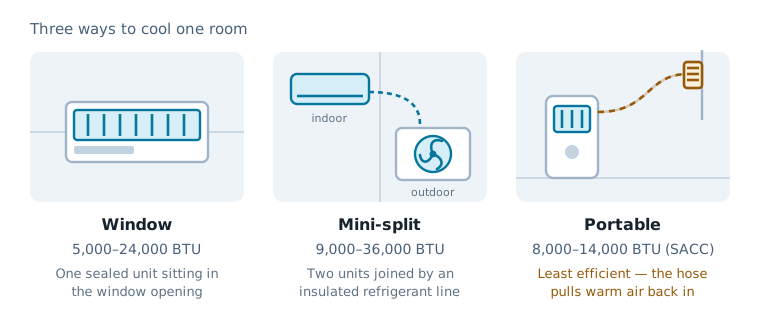
If the calculator says your load exceeds the largest portable, believe it — a mini-split delivers the same cooling at roughly half the electricity, and a window unit is more efficient per BTU where a window is available.
FAQ
Why does my 12,000 BTU portable AC feel weak?
Because 12,000 ASHRAE BTU is typically only 6,500–7,500 BTU SACC of delivered cooling. Sized honestly, that unit suits a 250–300 sq ft room at best, not the 500 sq ft the box implies.
Single-hose or dual-hose portable — does it matter?
It does. A single-hose unit blows room air out the exhaust, creating negative pressure that pulls warm, unconditioned air in through gaps — so real-world cooling drops. A dual-hose unit draws outdoor air for condenser cooling instead, so it holds capacity better in warm rooms.
What size portable AC for a 300 sq ft room?
Size on SACC, not the box number: roughly 8,000–10,000 BTU SACC for 300 sq ft in a moderate climate, more if it's sunny or on a top floor. The old ASHRAE label on the same unit might read 12,000–14,000 BTU.
Can one portable AC cool a whole apartment?
No — a portable cools one room at a time, and doorways bleed the cold air away. For several rooms, use a window or portable unit per room, or a multi-zone mini-split, which is far more efficient for whole-home cooling.